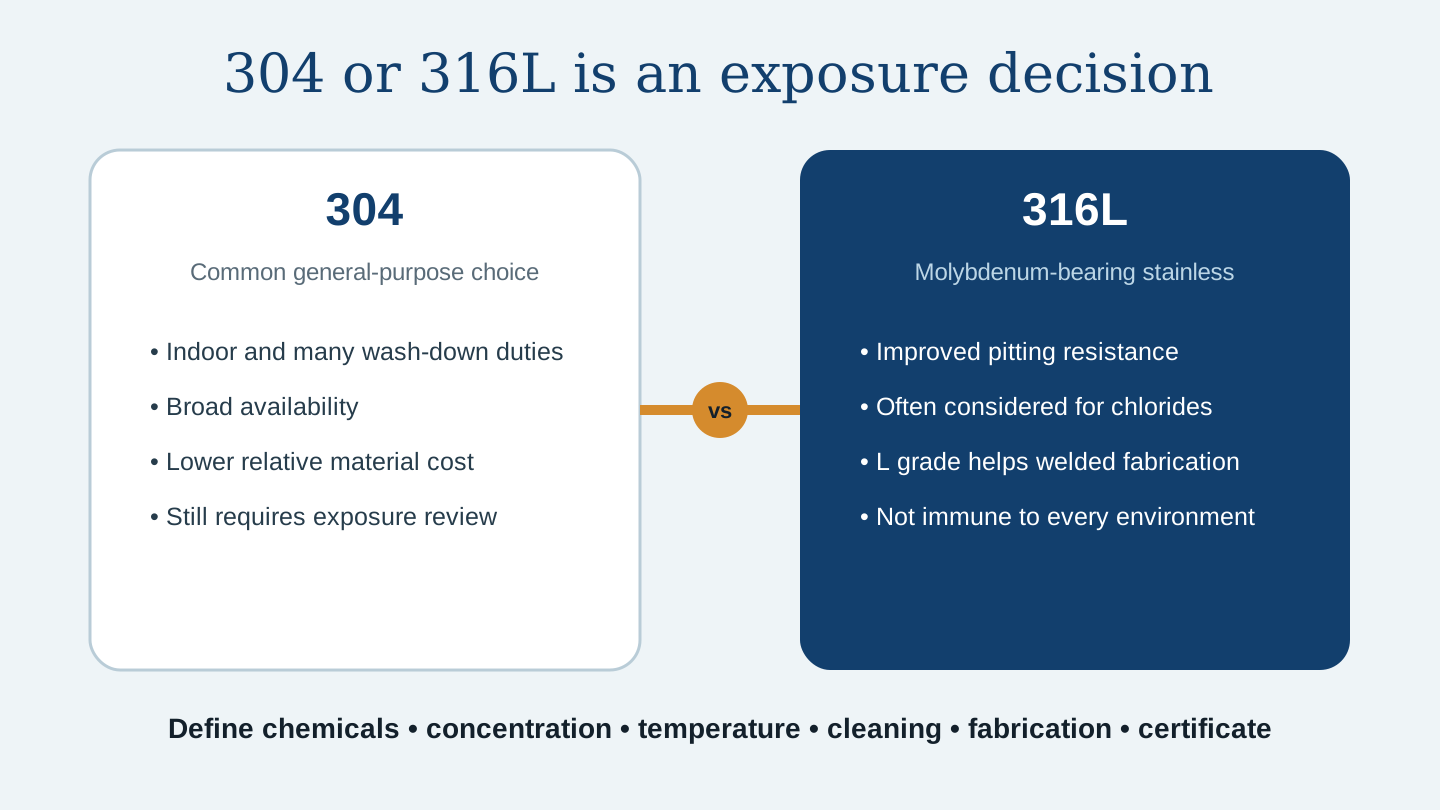
The grade name is only the start
304 and 316L are both widely used austenitic stainless steels, but selection should begin with the real exposure rather than a slogan such as “316 never rusts.” The mesh geometry creates crevices at wire crossings, while cutting, welding, deposits and cleaning can change local conditions. The same grade can perform differently in dry air, warm chloride wash water and an acidic process stream.
Why 304 is often the baseline
304 is commonly available and suitable for many indoor, atmospheric, general industrial and food-equipment duties when the actual chemicals, temperature and cleaning regime are compatible. It is often the economical reference point for comparing alternatives. That does not make it a default for every wet process: salts, bleach-containing cleaners, retained deposits and poor rinsing can create a more aggressive local environment than the room description suggests.
What 316L changes
316L contains molybdenum, which generally improves resistance to pitting in chloride-bearing environments compared with 304. The low-carbon “L” designation is relevant where welded fabrication and sensitization control matter. These are useful advantages, not immunity. Chloride concentration, temperature, oxygen, pH, deposits, stress and cleaning frequency still affect risk, and a more highly alloyed material may be needed for severe service.
Questions that decide the comparison
Chemical exposure
Name every process fluid, cleaning agent and contaminant. Include concentration, pH and whether exposure is continuous, intermittent or splash only.
Temperature and deposits
Record operating and cleaning temperatures. State whether product can dry on the mesh or collect at wire crossings and frames.
Fabrication
Identify welds, cut edges, frames and post-fabrication cleaning or passivation requirements. Do not assume a raw mesh certificate covers fabrication quality.
Verification
Specify the exact alloy designation, certificate type and any inspection or surface-finish requirement needed for the project.
Food and hygienic equipment
A stainless grade name does not by itself establish food-contact suitability. Review the complete equipment design, wire surface, weld finishing, cleanability, retained product, applicable regulation and customer standard. Mesh that is difficult to drain or inspect can remain unsuitable even when the alloy is acceptable. Ask for material documentation and assess the fabricated component, not only loose wire cloth.
Magnetism is not a reliable grade test
Annealed austenitic stainless is generally weakly magnetic, but cold work during wire drawing and weaving can increase magnetic response. A magnet cannot reliably distinguish 304 from 316L, and absence of attraction is not a material certificate. Use supplier traceability and, where justified, appropriate positive material identification.
How to write the RFQ
- State the exact grade, such as 304 or 316L, rather than “stainless.”
- Describe process and cleaning exposure with concentration and temperature.
- Add weave, aperture, wire diameter, dimensions, edges and quantity.
- Define welding, finish, passivation and certificate requirements.
- Ask alternatives to be quoted separately with the reason for the substitution.
If service history exists, include grade, duration, failure location and photographs. A short exposure description often changes the recommendation more than a long generic material comparison.
Look for the location and form of attack
Uniform discoloration, tea staining, pitting at crossovers, attack beside welds and rust transferred from carbon-steel tools point to different causes. Photographs, water chemistry, cleaning records and the exact failure location are more useful than the statement “stainless rusted.” Correct contamination and drainage issues before assuming that a grade change alone will solve the problem.
Use a documented decision
Record why 304, 316L or another alloy was selected and which assumptions would trigger review. Examples include a higher chloride level, hotter cleaning cycle, new sanitizer, welded frame or longer residence time. This turns the grade choice into a maintainable engineering decision. When uncertainty remains, exposure testing, corrosion advice or the equipment owner’s material standard should control the final specification.